
When someone is living with dementia, it can be easy to focus on what they are no longer able to do.
They may no longer be able to follow a recipe independently, manage the family finances, read a complicated book, or participate in an activity they once loved in the same way.
Quick answer
Dementia does not mean that a person has stopped needing purpose, stimulation, connection, or opportunities to participate in the world around them. In fact, finding ways to keep the mind engaged can be an important part of dementia care.
What Is Cognitive Engagement?
Cognitive engagement means using the mind to think, remember, communicate, make choices, solve problems, learn, create, or connect information to past experiences.
That doesn't necessarily mean sitting down with a crossword puzzle or a computer brain-training game.
It can happen during everyday life.
Listening to a favorite song and talking about what it reminds someone of is cognitive engagement. So is helping set the table, sorting photographs, watering plants, playing a familiar game, folding laundry, telling a story, choosing what to wear, or talking about a favorite hobby.
The National Institute on Aging notes that staying engaged in meaningful activities may have cognitive benefits and that activities involving music, theater, dance, creative writing, and other interests have shown promise for quality of life and well-being. At the same time, NIA cautions that research has not established that these activities produce a lasting improvement in cognition for everyone.
That distinction matters.
The goal isn't to “cure” dementia or prevent every change in memory. The goal is to keep the person engaged with life.
Engagement Should Start With the Person
One of the biggest mistakes caregivers can make is choosing an activity simply because it is labeled a “dementia activity.”
A better starting point is:
- Who is this person?
- What did they enjoy?
- What roles were important to them?
- What did they know how to do?
- What made them feel useful?
- What music did they love?
- What topics could they talk about for hours?
- What activities still bring them pleasure?
The Alzheimer's Association recommends considering a person's skills, abilities, interests, and preferences when choosing activities and adapting activities as dementia progresses.
For example, a person who spent decades gardening may not be able to manage a garden independently anymore. But they might still enjoy choosing flowers, watering plants, sorting seeds, touching the soil, or talking about what is growing.
The activity has changed.
The person hasn't.
Cognitive Engagement Can Also Support Connection
Engagement isn't only about keeping the brain busy.
It can create opportunities for conversation, emotional connection, purpose, and shared experiences.
Music is a wonderful example. A familiar song may lead to singing, movement, memories, conversation, or simply a moment of enjoyment together.
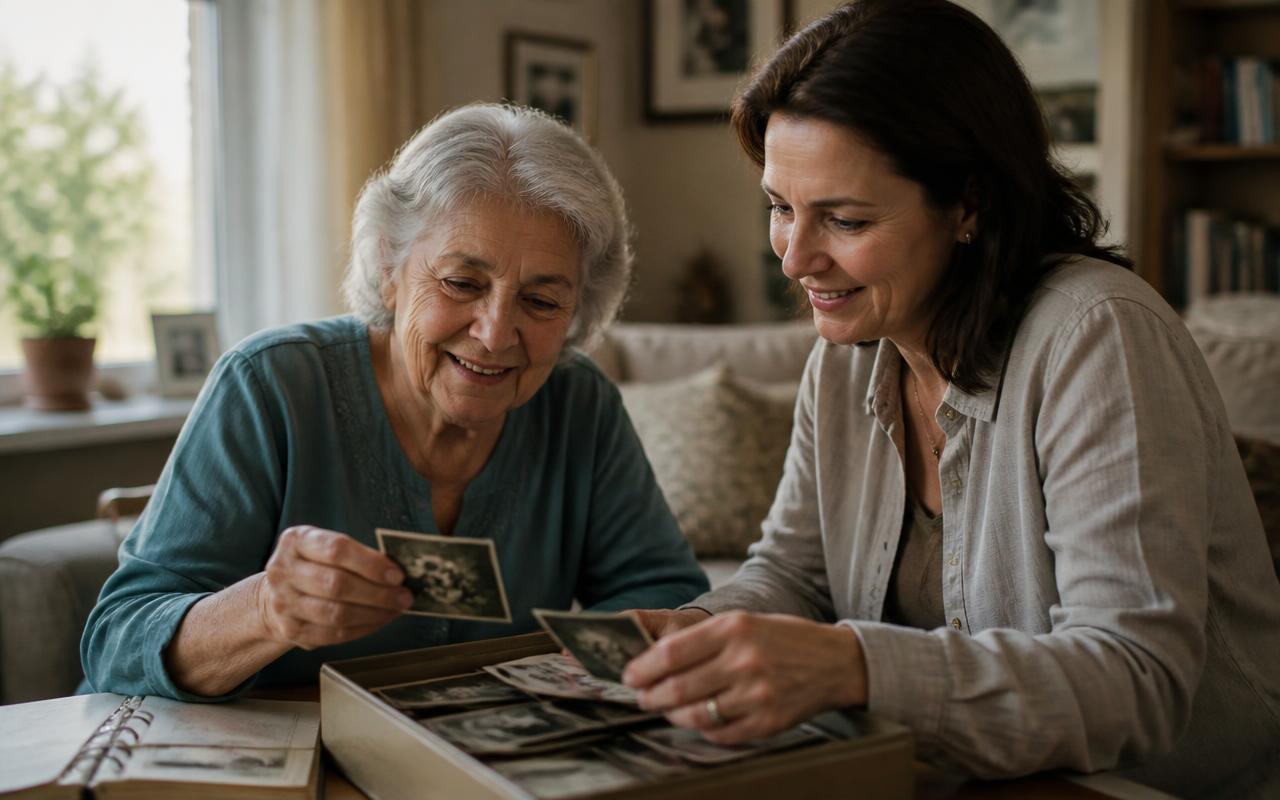
Looking through old photographs can similarly provide opportunities to talk about family, places, relationships, and experiences—even when specific details aren't always remembered.
The Alzheimer's Association notes that reminiscence activities can use music, art, storytelling, and familiar objects to help begin conversations and support a person's sense of identity and connection.
Research has also found an association between engagement in personally meaningful favorite activities and greater functional independence and lower depression among people living with dementia.
Don't Turn Every Activity Into a Test
This is an important one.
If an activity becomes a test of memory, it can quickly become frustrating.
- “Who is this?”
- “What year was this?”
- “Do you remember where we went?”
- “What comes next?”
Sometimes the better approach is simply to enjoy the moment together.
Look at the photograph.
Listen to the song.
Talk about what you notice.
Let the person participate in whatever way they can.
The National Institute on Aging recommends adapting activities to what a person can do, helping them get started when needed, watching for frustration, and making sure the person feels successful and enjoys the experience. It also notes that simply watching can be a perfectly appropriate form of participation if that's what the person enjoys.
As Abilities Change, Change the Activity—Not the Expectation of Participation
Dementia is progressive, so an activity that worked six months ago may eventually become too difficult.
That doesn't mean it's time to stop providing opportunities for engagement.
It may simply be time to adapt the activity.
A person who once cooked independently might now:
- Measure ingredients.
- Stir a bowl.
- Choose between two ingredients.
- Tell you how they used to make a favorite recipe.
Someone who once loved reading might:
- Listen to an audiobook.
- Look through a magazine.
- Read a short poem together.
- Talk about a favorite author.
Someone who loved sports might:
- Watch a familiar game.
- Sort sports cards.
- Listen to a favorite team's broadcast.
- Talk about memorable players.
Someone who enjoyed music might:
- Listen to favorite songs.
- Sing.
- Clap or move to the music.
- Choose which song comes next.
The National Institute on Aging specifically recommends activities such as cooking, exercise, music and dancing, gardening, household chores, visiting with family, and familiar outings—and emphasizes adapting them to the person's abilities and preferences.
What If They Don't Want to Participate?
That's important information, too.
Not every activity will work every time.
A person may be tired, overwhelmed, uncomfortable, or simply not interested.
Don't force it.
Try something different—or allow a quiet moment together.
NIA recommends paying attention to frustration and making sure the person feels successful and has fun.
Engagement doesn't always have to look active.
Sometimes sitting together and listening to music is enough.
Sometimes holding someone's hand is enough.
Sometimes watching the world go by together is enough.
The goal is not constant stimulation.
The goal is meaningful connection and participation at a level that feels right for that person.
A Better Question for Caregivers
Instead of asking:
“What activity should I do with someone who has dementia?”
Try asking:
“What matters to this person?”
That question can lead you toward activities that are more meaningful, more enjoyable, and more likely to fit the person's current abilities.
How DemiHelp can help
At DemiHelp, this is an important part of our approach to dementia care. The app provides individualized strategies, games, and communication support based on the specific care recipient—because meaningful engagement should be connected to the person, not simply to a diagnosis.
Dementia changes abilities over time.
But a person's history, preferences, relationships, interests, and need for purpose don't disappear simply because their abilities change.
Sometimes the most meaningful activity isn't a “dementia activity” at all.
It's something that still feels like them. 💜
Personalized Guidance for Your Loved One
Every person living with dementia is unique. While this article provides evidence-informed guidance, DemiHelp helps you apply that guidance to the person you love.
Describe what happened, ask questions about your loved one's specific situation, and receive personalized support based on their routines, preferences, behaviors, communication style, and changing needs. Over time, DemiHelp also helps you keep track of what works, making future caregiving decisions easier and more personalized.
References
For informational purposes only. Not medical advice. Consult healthcare professionals for medical decisions.