
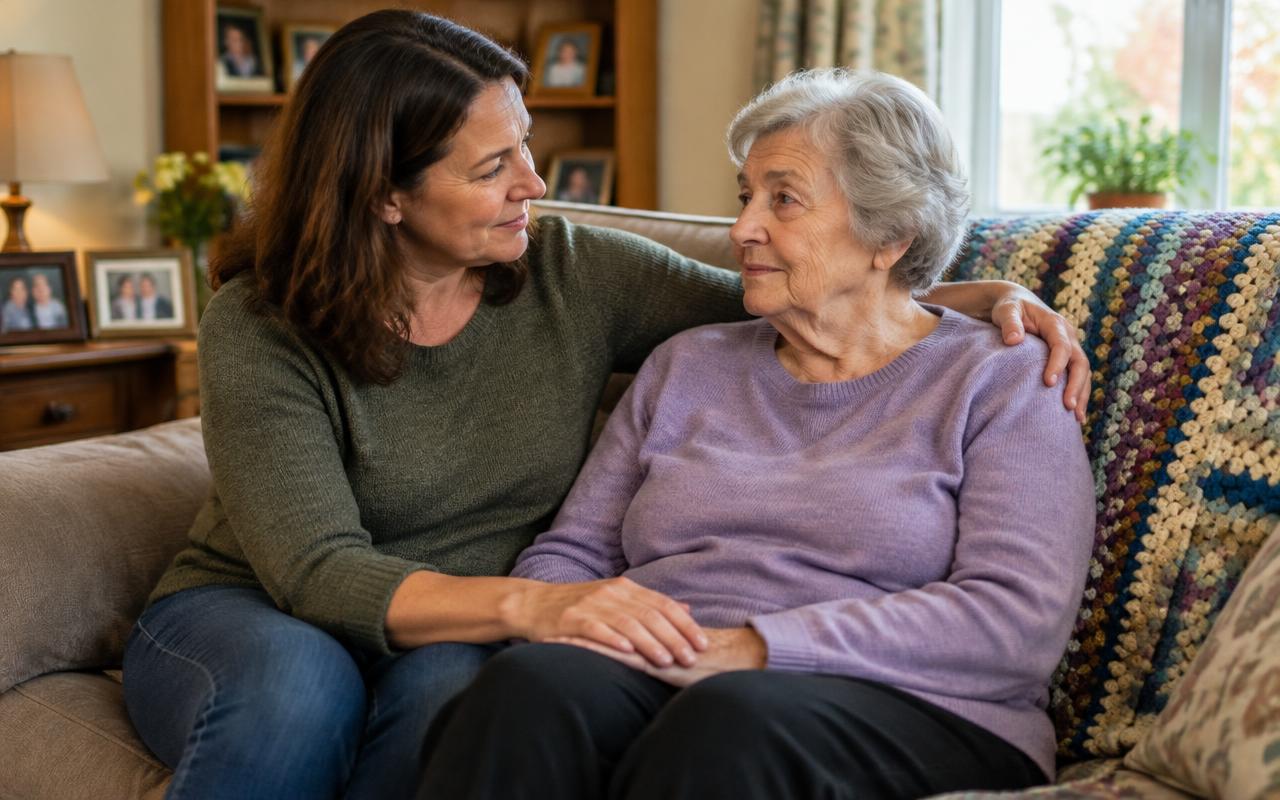
“I want to go home.”
For many caregivers, these words can be heartbreaking—especially when the person is already at home.
You may be tempted to explain, “But you are home.” You may show them their bedroom, point out familiar belongings, or remind them how long they have lived there.
But arguing about where “home” is usually doesn't solve the problem.
For a person living with dementia, “home” may represent much more than a physical place. It may mean feeling safe, familiar, comfortable, loved, or in control.
The goal is not necessarily to convince the person that they are wrong. Instead, try to understand what the words might be communicating.
What might “I want to go home” mean?
Dementia can affect a person's ability to understand their surroundings and remember recent events. A familiar place may no longer feel familiar.
The person may also be looking for something associated with an earlier period of life—a parent, spouse, children, a previous home, a job, or a time when they felt more independent.
Sometimes “I want to go home” may really mean:
- I don't feel comfortable here.
- I feel confused.
- I want something familiar.
- I miss someone.
- I'm bored or restless.
- I'm tired.
- I'm hungry or thirsty.
- I feel anxious or unsafe.
- I want to feel in control again.
There may not be one explanation, and the meaning can change from one day—or even one moment—to the next.
What should you say?
Instead of immediately correcting the person, start with the feeling.
You might say:
“You want to go home. Tell me what you miss about home.”
Or:
“You seem worried. I'm here with you.”
Or simply:
“You want to feel safe. Let's sit together for a while.”
The goal is to respond to the emotion behind the person's words rather than arguing about the facts.
You don't have to prove that they are already home.
Try asking what “home” means to them
If the person is able to communicate, gently explore the idea.
Try:
- “What do you like about home?”
- “Who is at home?”
- “What would you like to do when you get home?”
- “Is there something you're looking for?”
- “Are you worried about something?”
Their answer may give you a clue about what they actually need.
If they say, “I need to go home because my mother is waiting for me,” correcting them may only increase distress.
Instead, you might say:
“You miss your mother. Tell me about her.”
This can open the door to a comforting conversation rather than an argument.
Create a feeling of home
Sometimes the environment itself can help.
Try bringing familiar things into the person's current surroundings:
- Favorite photographs
- Familiar music
- A favorite chair or blanket
- Familiar scents
- Objects connected to hobbies or work
- Favorite foods
- A familiar daily routine
A small collection of meaningful photographs can also help connect the person with familiar people and places.
Look for a pattern
Pay attention to when the person says “I want to go home.”
Does it happen:
- Late in the afternoon?
- Around bedtime?
- When the house becomes noisy?
- When they are hungry?
- After visitors leave?
- When they are tired?
- When they have nothing to do?
- When they are in an unfamiliar place?
Keeping a simple note of what happens before and after the statement may reveal a pattern.
If the person becomes restless at a particular time of day, a walk, music, a snack, a familiar activity, or some quiet time may help redirect their attention.
Dementia care often involves experimenting and adjusting rather than finding one solution that works every time.
What if they want to leave?
Take the statement seriously, particularly if the person begins trying to leave the house.
Wandering can create significant safety risks. A person with dementia may have a purpose in mind—even if that purpose doesn't make sense to someone else.
Stay calm and avoid physically forcing the person unless there is an immediate safety emergency.
Try:
“Let's sit down for a minute. Tell me where you want to go.”
Then redirect toward something familiar:
- “Let's have some coffee first.”
- “Come help me with this.”
- “Let's look at these photographs together.”
If wandering or attempts to leave are becoming frequent, discuss safety strategies with the person's healthcare team and consider additional supervision or environmental safety measures.
What not to do
Try to avoid:
- “You ARE home.”
- “I've already told you that.”
- “Your mother has been gone for years.”
- “Stop asking me that.”
These statements may be factually accurate, but they may not address the person's emotional need in that moment.
Instead, think:
Connection before correction.
Listen for the feeling behind the words, offer reassurance, and then look for a way to redirect.
Remember: “Home” can be a feeling
When a person with dementia says, “I want to go home,” they may be asking for much more than a change of address.
They may be asking:
- “Where am I safe?”
- “Where do I belong?”
- “Where are the people I love?”
- “Can someone help me feel okay?”
You may not always be able to answer those questions with words.
But you can answer them through your presence, your tone of voice, familiar routines, meaningful objects, and the feeling of safety you create around them.
Sometimes, helping someone feel at home is more important than convincing them where home is.
When to seek additional help
A sudden or significant change in confusion, behavior, communication, or ability to function should be discussed with a healthcare professional. Changes can sometimes be related to pain, illness, medication effects, or another medical problem rather than dementia alone.
DemiHelp reminder
Every person with dementia is different. Try one approach, observe the response, and adjust. What works beautifully one day may not work the next.
Personalized Guidance for Your Loved One
Every person living with dementia is unique. While this article provides evidence-informed guidance, DemiHelp helps you apply that guidance to the person you love.
Describe what happened, ask questions about your loved one's specific situation, and receive personalized support based on their routines, preferences, behaviors, communication style, and changing needs. Over time, DemiHelp also helps you keep track of what works, making future caregiving decisions easier and more personalized.
Sources & Further Reading
- Alzheimer's Association — Behaviors
Information about common dementia-related behaviors, including wandering, and approaches caregivers can use to respond.
- National Institute on Aging — Caring for a Person With Alzheimer's Disease
Practical guidance for caregivers on communication, behavior changes, routines, and creating a supportive environment.
- Alzheimer's Association — Daily Care
Guidance for caregivers on communication, routines, safety, and responding to changes in behavior.
For informational purposes only. Not medical advice. Consult healthcare professionals for medical decisions.