
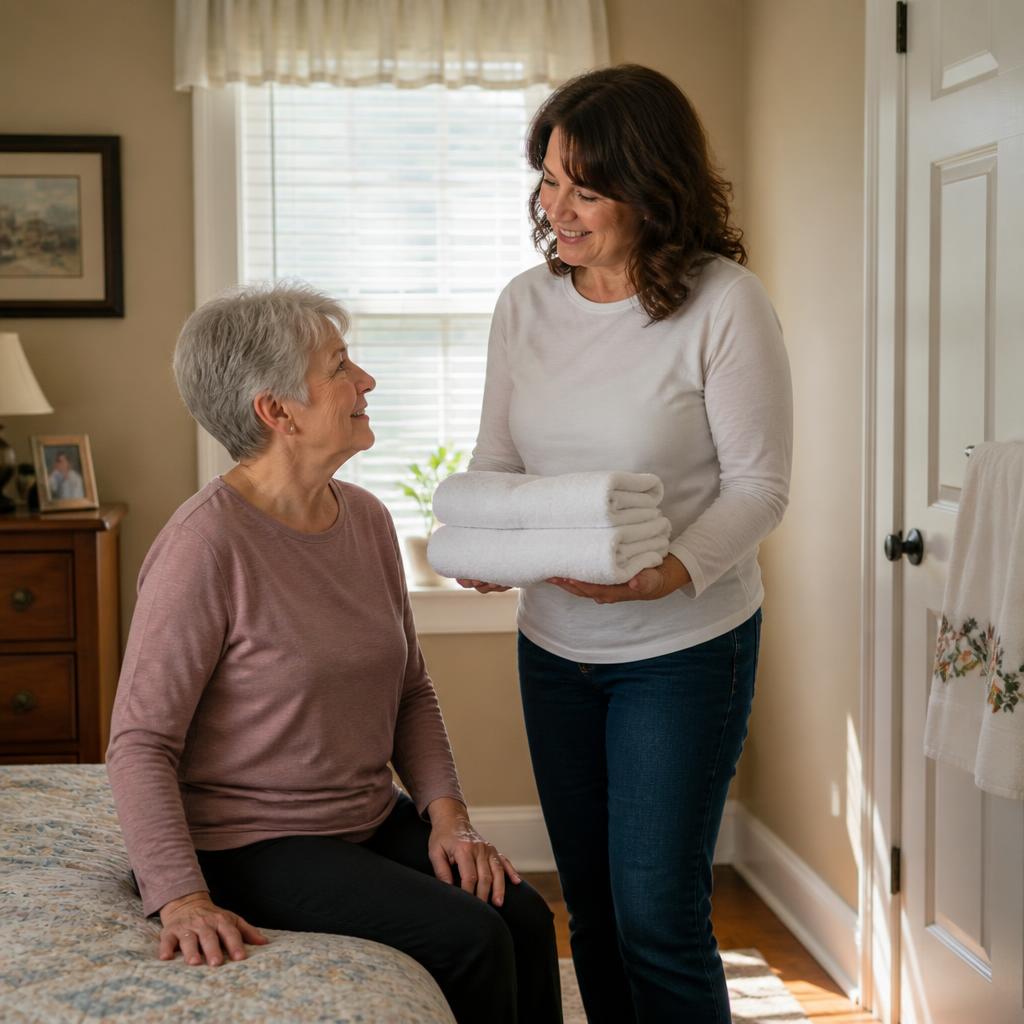
Bathing can unexpectedly become one of the most difficult parts of dementia caregiving. Someone who bathed independently throughout their life may begin refusing showers, becoming frightened in the bathroom, or getting upset when a caregiver tries to help.
Understanding why can change the way you approach the situation.
Quick answer
A person with dementia may resist bathing because they feel cold, embarrassed, frightened, confused, or uncomfortable, or because they no longer recognize why bathing is necessary. Instead of forcing the issue, look for what may be causing the distress, protect the person's privacy and dignity, make the environment comfortable, simplify the process, and try again later when necessary.
Why this happens
Think about what bathing requires.
The person has to remove their clothes, enter an unfamiliar-looking or slippery space, understand running water, tolerate changes in temperature, follow several steps, and potentially accept intimate help from another person.
Dementia can make each of those things harder.
The person may not understand why they need a bath or may believe they have already taken one.
They may feel embarrassed being undressed in front of another person. Bathing is an activity most adults have performed privately for decades, and needing assistance can feel intrusive or threatening.
The bathroom itself can also be frightening. Changes in depth perception may make stepping into water difficult, while running water, echoes, bright lights, cold surfaces, or an unfamiliar shower can be overwhelming.
Sometimes resistance may also be communicating something the person cannot easily explain: I'm cold. I'm scared. That hurts. I don't understand what you're doing.
Before assuming the person simply “won't bathe,” try to determine what the experience might feel like from their perspective.
What you can do
1Find out what is bothering them
Rather than immediately trying to convince the person to bathe, watch their reaction. When does the resistance begin? Is it when you mention the bath? When clothing comes off? When they see the shower? When the water starts? Identifying the moment distress begins may help you identify what needs to change.
2Follow their familiar routine
If they always showered in the morning, an evening shower may feel strange. If they preferred baths rather than showers—or the reverse—try to preserve that preference when it remains safe. The Alzheimer's Association recommends trying to maintain the person's previous bathing routine when possible.
3Give simple choices
A little control can make an intimate activity feel less threatening. Instead of: “You need to take a shower now.” Try: “Would you like to wash up now or after breakfast?” Or: “Would you rather have a shower or wash at the sink?” Avoid presenting too many choices at once.
4Make the bathroom comfortable before you begin
Prepare everything first. Have towels, soap, shampoo, clean clothes and other supplies ready so the person isn't left waiting. Keep the room comfortably warm and check the water temperature carefully. A person with dementia may have difficulty judging whether water is dangerously hot or uncomfortably cold. Reduce unnecessary noise and distractions.
5Protect privacy and dignity
Being undressed in front of another person can be deeply uncomfortable. Use a large towel to keep the person's body covered as much as possible and uncover only the area you're washing. If appropriate, consider whether the person would be more comfortable receiving bathing assistance from someone familiar or someone of the same sex.
6Let them do as much as they can
Don't automatically take over. Give the person a washcloth or soap and allow them to participate. Use short prompts: “Here's the washcloth.” “Wash your arm.” Demonstrating the movement yourself may also help. Supporting remaining abilities can preserve independence as well as dignity. NIA recommends balancing assistance with allowing the person to remain as independent as possible.
7If they're becoming distressed, stop
A bath does not have to become a battle. If the person becomes increasingly frightened or upset, change the subject, move to another activity, and consider trying again later. The Alzheimer's Association specifically recommends distraction and trying again later when a person resists bathing.
8Consider alternatives to a full bath or shower
Cleanliness doesn't always require a traditional shower. Depending on the person's needs, alternatives may include washing at the sink, a sponge bath, warm wet towels, or washing different areas at different times. NIA recommends considering sponge bathing when a full bath or shower is too upsetting, while the Alzheimer's Association similarly encourages caregivers to be flexible about bathing methods and standards.
Why these strategies work
The goal isn't simply to get the bath completed.
It's to make personal care feel safe enough for the person to participate.
Dementia changes the ability to interpret surroundings, remember why something is happening, follow sequences, communicate discomfort, and understand another person's intentions.
A caregiver may know: “I'm helping you take a shower.” But the person with dementia may experience: “Someone is taking off my clothes and I don't understand why.” That difference matters.
Warmth, privacy, familiarity, simple instructions and choices can reduce some of the uncertainty surrounding the experience. Allowing the person to participate also preserves remaining abilities and a sense of control.
Common mistakes to avoid
- Arguing about whether the person needs a bath
- Saying, “You haven't bathed in days.”
- Removing clothing before the person understands what is happening
- Rushing through the process
- Giving several instructions at once
- Continuing when the person is becoming increasingly frightened or agitated
- Assuming resistance is deliberate stubbornness
- Making the bathroom too cold
- Leaving an unsteady person alone in the bath or shower
- Prioritizing your previous bathing standards over the person's comfort and current needs
The Alzheimer's Association recommends adapting bathing expectations and protecting dignity, privacy and comfort throughout the process.
When to contact a healthcare professional
Sometimes a new resistance to bathing isn't primarily about dementia. A person who suddenly becomes upset when being touched or moved could be experiencing pain or another medical problem that they cannot explain clearly.
NIA notes that medical problems can produce confusion and behavior changes in people with Alzheimer's and that the person may be unable to communicate what is wrong.
Contact a healthcare professional if you notice a significant or sudden change in behavior, signs of pain or illness, new skin problems, sores or rashes, or other changes that concern you.
Also seek professional advice if personal hygiene has become difficult enough that you're concerned about the person's health or you can no longer safely provide the necessary care.
Caregivers also ask
How often does someone with dementia need to shower?
There isn't one bathing schedule appropriate for every person. NIA advises flexibility and notes that a full bath or shower may not be necessary every day; alternative washing can be used between baths depending on the person's needs.
What if they say they already took a shower?
Avoid turning it into a memory test or argument. Try approaching washing later, connecting it with an established routine, or offering a simpler option such as washing at the sink.
What if my loved one becomes angry when I try to help?
Stop and consider what may be causing the reaction. They may be frightened, embarrassed, cold, confused or uncomfortable. If the situation is safe, give them space, redirect their attention and try again later.
Is a sponge bath okay for someone with dementia?
It can be a useful alternative when a full bath or shower is distressing. Both NIA and the Alzheimer's Association describe alternative washing approaches for people who find conventional bathing difficult.
What if bathing is becoming too difficult for me to manage?
You don't have to manage every personal-care task alone. Home care aides can assist with activities such as bathing and dressing, and healthcare professionals can help determine whether physical or medical issues are contributing to the difficulty.
Personalized Guidance for Your Loved One
Every person living with dementia is unique. While this article provides evidence-informed guidance, DemiHelp helps you apply that guidance to the person you love.
Describe what happened, ask questions about your loved one's specific situation, and receive personalized support based on their routines, preferences, behaviors, communication style, and changing needs. Over time, DemiHelp also helps you keep track of what works, making future caregiving decisions easier and more personalized.
References
For informational purposes only. Not medical advice. Consult healthcare professionals for medical decisions.